

13. How is Adult ADHD Treated? (Taking prescription stimulants feel like for the first time.)
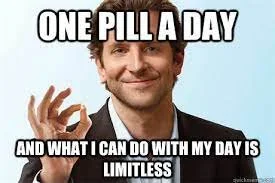
Eddie Morra is a struggling author in New York City. His life is going downhill, and he struggles with low motivation and a lack of focus. When his girlfriend leaves him, and the rent is due, he's introduced to something that suddenly turns his life around. A nootropic that awakens his intellect and motivation and provides laser-like focus on his ambitions. With a hefty supply of the pills, he uses his newfound chemical superpowers to become wealthy and successful and get his girl back!
Who remembers the movie, Limitless? It's not just entertaining but how I would describe taking a specific medication to treat my ADHD for the first time. Not all medications used to treat neurodivergence have the same effect, and all medicines have side effects. If you want to know about the drugs to treat ADHD and how they work, keep reading!
The symptoms of ADHD can be overwhelming, and they can massively hinder job and personal life. It makes perfect sense to want to medicate for those reasons. There are all types of medication, from non-stimulants to antidepressants, used in treating ADHD, and there are also natural alternatives. Which is best for you?
It's chemical.
Photo by Anna Shvets
To make this much easier to understand, let's briefly recap ADHD and its unique brain chemistry. You may have heard the terms "neurotypical" and "neurodivergent" in discussions involving this subject. Those are very powerful descriptors if you break down the meanings of the word.
"Neurotypical" (often abbreviated as NT) refers to individuals with a typical functioning brain, meaning they do not have a diagnosed neurological or psychiatric condition such as ADHD, autism, or schizophrenia.
"Neurodivergent" is a term used to describe individuals with a neurological or psychiatric condition that causes them to think, process information, and experience the world differently from what is considered typical or mainstream.
The word "neuro" is a crucial component because the way we perceive the world is mainly chemical. Norepinephrine and dopamine are neurotransmitters, chemicals in the brain that transmit signals between nerve cells. They play essential roles in regulating attention, mood, and behavior.
Norepinephrine is involved in regulating attention, alertness, and focus, as well as the fight-or-flight response. It also affects mood by acting as an antidepressant. It can help regulate the autonomic nervous system, which controls heart rate, blood pressure, and digestion functions.
Dopamine is a neurotransmitter involved in regulating movement, motivation, reinforcement, and reward. It is also involved in regulating attention, inspiration, and mood. In individuals with ADHD, the levels of norepinephrine and dopamine in the brain are believed to be disrupted, leading to symptoms such as inattention, impulsivity, and hyperactivity.
Managing or equalizing this imbalance is the aim of medications used to treat neurodivergence.
There are three types of meds mainly used for treating ADHD:
Stimulants.
Non-Stimulants.
Antidepressants.
Non-stimulants
Non-stimulant medications for ADHD increase neurotransmitters, such as norepinephrine and dopamine, in the brain responsible for regulating attention, mood, and behavior.
Atomoxetine (Strattera) is a non-stimulant medication that selectively inhibits the reuptake of norepinephrine in the brain, leading to an increase in the level of norepinephrine, which is associated with improved attention, organization, and impulse control.
Non-stimulants like Atomoxetine (Strattera do not contain chemicals that boost activity between neurotransmitters by activating the nervous system. I did not find these medications effective and experienced some adverse side effects. The use of these drugs has been relatively recent (since 2002). These medications' exact mechanism of action still needs to be fully understood and may vary from person to person. Take that as you will. Full disclosure made me feel funny, and not in a good way.
My doctor then suggested antidepressants. Antidepressants are sometimes used to treat ADHD in individuals who have comorbid conditions, such as depression or anxiety, in addition to ADHD. This makes sense because I expressed that I had some depression and anxiety.
It is important to note that while antidepressants may be effective in treating comorbid conditions in individuals with ADHD, they are not FDA-approved as primary treatments for ADHD. I generally feel uncomfortable experimenting with them.
Non-stimulants and antidepressants, though, pale compared to stimulants regarding effectiveness and frequency of use. An estimated 6.1 million children and adults in the United States take prescription stimulants for ADHD symptoms. Facts.
Stimulants
The following is neither an endorsement for nor against stimulants used to treat ADHD (neurodivergence). I am focusing more on it because of its widespread usage and personal experience.
Stimulant medications, such as Ritalin and Adderall, work by increasing neurotransmitters dopamine and norepinephrine levels in the brain, leading to improved focus, attention, and impulse control. These medications also increase the levels of other neurotransmitters like noradrenaline, which help to improve energy and mood.
In contrast, non-stimulant medications for ADHD work by regulating the levels of these neurotransmitters without directly increasing them, leading to similar improvements in attention, behavior, and mood. Non-stimulant drugs tend to have a slower onset of action than stimulants, and their effects may last longer.
Many people seem shocked to learn this, but most stimulants used to treat ADHD are amphetamines. You may think, "that sounds kind of like meth.". My response would be, "it kind of is.". That might be why it's so damn effective at helping people concentrate.
Limitless pills. That's what taking stimulants to treat ADHD feels like, no lie. That moment in the story when the protagonist finally encounters the thing that will change his life forever. I was reluctant to "cash in" the script for what is essentially pure amphetamine in a time-release capsule. As mentioned in previous posts, I don't even take OTC drugs for headaches. But I felt like my arm was twisted behind my back. The perpetrator? The pressures of "neuro-normative" society and what it requires from us all as a daily sacrifice to merit our right to suck breath on this earth for another pay period.
So, yeah, I did it. I compromised against my values after copious blind attempts at the route, au natural. I went to the pharmacy and said, I'll take one controlled substance, please.
It's as if I've been blind and received eyesight miraculously. I only leave my desk to use the bathroom. Hours passed, and, damn, I somehow forgot about lunch. Usually, it's the only reprieve from the monotony I dread so much. I felt like I could do anything as long as I had Adderall. To quote Drake, "Popped an Adderall, I feel like I can lift a tree up."
The Downside to Uppers
Remember, Limitless. It wasn't just happily ever after once he acquired the pills. There are downsides to temporarily turning up your neurons to ten!
Stimulants like Dexedrine, Adderall, and Ritalin can provide up to 4-10 hours of solid focus. The side effects were what made me want to stop taking the drugs. Loss of appetite, weight loss, trouble sleeping, crankiness, and nervousness.
And suppose you want to talk about crankiness; according to some accounts, Hitler's use of stimulants may have contributed to his erratic and unpredictable behavior. For example, it has been reported that Hitler became increasingly paranoid and irrational as the war progressed. Some have suggested that his use of stimulants may have played a role in this behavior change.
In addition, the FDA also warns about the potential for abuse brought about by stimulant use. They warn that stimulants used for ADHD may make heart and psychiatric problems more likely. So that sucks. The same drugs can treat children as young as three years of age. Given the warnings mentioned earlier about stimulants, this information is troubling.
My experience
Given all the things I just said about medications, I wouldn't change a thing. I would still use stimulants to treat my lack of focus. I still do. I understand how to use them better now if that makes sense. I have a balance with the medication. With education, I have learned that certain activities don't require the same type of focus, and I don't need the pills all the time. I take breaks; I also take half doses.
The "drug" the protagonist took in the film was a nootropic called NZT-48. Nootropics are real; these supplements are defined as smart drugs and cognitive enhancers. Similar to adaptogens, a wide range of natural or synthetic supplements or drugs and other substances claimed to improve cognitive function or promote relaxation,[2] particularly boosting mood,[3] executive functions, attention, memory, creativity, or motivation in healthy individuals.
The movie portrays these types of supplements badly because of how messed up people get when they withdraw from the drug. But I've taken a specific nootropic for nearly a decade, and it's helped me a lot.
I'm talking about Alpha Brain by Onnit.
The biggest helper to me outside of prescription drugs is Alpha Brain. It's a plant-based cognitive support supplement. It primarily helps with memory and focus and promotes mental flow states and cognitive clarity. I agree. I started taking it back in 2014, and it's remained a tool in my arsenal against neurodivergence. When I decided to reduce my stimulant use, I used Alpha Brain as a replacement. I am not saying you should do that, but it helps me tremendously. To learn about Alpha Brain, read the following article, where I will extensively review the supplement.
The other thing I did was harness the power of writing things down. I've always struggled with prioritizing my tasks to harmonize with the natural rhythm of my daily life. I tried digital life planners and journals, but none worked for me. My problem was that I needed to know more about myself; How can I use my time to grow the things that nurture my needs, desires, and natural talents? That's why I created, The You Testament.
The You Testament is a strategic life planning workbook. It contains twenty-one exercises explicitly designed to help you understand who you are, what you genuinely love, and how to accomplish goals. To learn more, check the link in the description.
In conclusion
To medicate or not to medicate? It's a big question; whether the answer is yes or no, it's good to understand your options thoroughly. I've learned that some prescription drugs can be both helpful and problematic in treating inattention or poor focus. There are more ways to boost my cognition and focus with tools like supplements and techniques like writing. Treatment is not one-size-fits-all, and finding balance with your ADHD is essential. That's all for this episode; much love, DC out!