

9. The TOP 6 Fictional characters who have ADHD. (Or, probably have it.)

Photo by Heriberto Jahir Medina
ADHD Heroes
Representation is important. Handicapable people need Daredevil, the financially downtrodden need Robinhood, and neurodivergent people aren’t any different. Who can be called the caped-crusader for people with ADHD, though? My response is: name a hero who can’t be.
Are there any fictional characters you can think of who might have ADHD? This random question popped into my head the other day while watching Dragonball Z (you’ll learn why later). I realized that many of my favorite fictional characters appear to have ADHD or at least neurodivergent traits. I thought this could be a fun idea, so here it is, the “TOP 6 Fictional characters who have ADHD”. (Or, probably have it.)
6 Archer Sterling (Archer)
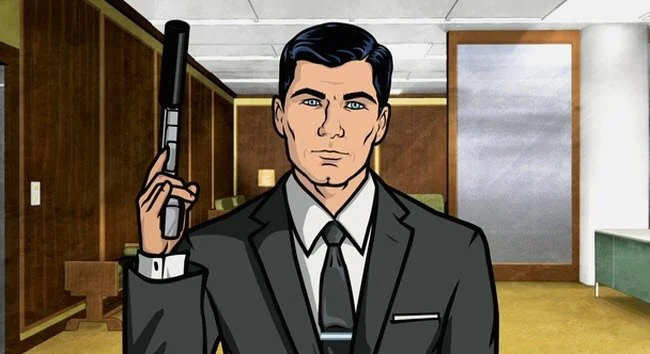
Archer is a world-class spy (analyst) and potty mouth. Like all of the characters you’ll read about, Archer thrives within the grips of danger. When the degenerate satire of James Bond isn’t drinking excessively, he can be found lusting after women.
He soothes boredom with sex, alcohol, gambling, and driving fast when he's not doing something else dangerous. He’s not used to rejection and does not process it well when it happens. He reacts without thinking about consequences and says what he’s thinking, even if it’s inappropriate.
Where’s ADHD come in?:
Though he seems to love women, he has issues with intimacy and long-term relationships. Source. (How ADHD affects relationships)
Archer is also a blatant alcoholic. Alcoholism and addiction are common ADHD comorbidities: source (Alcohol abuse and ADHD) and Source (Addiction and ADHD).
5 Alan ( The Hangover)

Alan is the most entertaining character in the Hangover movies by far. From the earliest scenes in the film, he is noticeably different from the other characters. He always seems to be off in his own world. When he does chime into a conversation, it’s usually weird and off-color. When Stu exclaims that he’s lost his Jewish grandmother's ring, a family heirloom preserved throughout the holocaust, Alan responds: “I didn’t know they gave out rings during the holocaust.”
The tragedy and plot of the entire film are revealed to have been Alan’s fault in the first place.At the movie's beginning, he admits he’d planned an evening of “wandering through the desert looking for hookers and cocaine.” The rest of the wolf pack relents and only desires the typical night of Vegas debauchery. Alan knows his idea is better, so he impulsively slips them all drugs, making them forget an epic night in Vegas. This decision sends the wolfpack on a life-threatening adventure where they cross paths with drug dealers, gang members, the law, and more.
At the same time, Alan is also the savior of the film when he uses his ability to count cards to win big at blackjack, which begs the question, “What is Alan’s deal”?
Where does ADHD come in?:
Alan exhibits his “Rain-man”-like card-counting skills to win enough money to save the wolf-pack. His ability to do this could be considered an example of his superior pattern recognition. Source (ADHD and superior pattern recognition)
Though Alan arguably is the film's hero; his impulsiveness is why the protagonists' lives were in trouble in the first place. Remember when he proposes they all become blood brothers, then slit his hand open with a pocket knife before they have time to accept his odd offer? Did I mention this was before they even started drinking? This can be linked to ADHD and its high potential for impulsive behavior. Source. (ADHD and impulsiveness)
Alan also seems to suffer from Rejection Sensitive Dysphoria (RSD), which is linked to ADHD. RSD is defined as “extreme emotional sensitivity and pain triggered by the perception that a person has been rejected or criticized by important people in their life.” Source. (ADHD and RSD)
Notice how Alan becomes upset to tears, in a child-like fashion, anytime his “wolf-pack” brothers become justifiably upset with him. He even clings to Phil and emulates some of his behaviors, like wearing his same aviator sunglasses. Deep down, he desperately wants to be loved and accepted.
4 Bart Simpson

Before South Park debuted, the Simpsons were the only cartoon besides Bevis and Butthead that I wasn’t allowed to watch as a kid. Remember all of those classic schemes Bart cooked up? Like when he stole the head off the town founder's statue? He confronted his school bully by turning his classmates into an organized army of bully hunters, and he was the general. Yet, his teachers called him an “underachiever?”
Bart Simpson is often known simply as a “bad” kid who always gets into trouble, which is why I liked watching the show. I admit it; I tried to emulate some of his behaviors by taking up cursing at an early age and keeping a slingshot in my back pocket. However, Bart isn’t just a bad kid. Some of his delinquencies are the result of symptoms of neurodivergence.
Where does ADHD come in?:
Bart is diagnosed with ADHD in the episode “Brother’s Little Helper” after he floods the school gymnasium. When I learned this, his behaviors made sense; he’s got several classic ADHD superpowers and areas to improve.
Bart never studies for tests and is failing multiple classes. Poor academic performance is probably the first indicator that someone will struggle with ADHD in their lifetime. (ADHD and poor academic performance)
Bart may be charming, but let’s face it, he’s a tiny bit of a delinquent. Much like poor grades, poor behavior is sometimes an indicator that neurodivergence is present. (ADHD and behavioral problems)
Even though he is a handful, he shows random bursts of hyperfocus and intelligence when he wants something. Classic Hyperfocus. He’s an advanced firearms expert; this is exhibited in the episode where he goes to military school. Once, he hijacked a tank and blew up an MLB Satellite in one shot. He’s fluent in many languages and even learned Japanese in a matter of hours. (ADHD and hyperfocus)
3 Goku (Dragonball, Dragonball Z)

This one is almost too easy. Goku from the Dragonball series is the strongest fighter in the universe, and he’s defeated world-destroying opponents with his bare hands. He is also an obvious neurodivergent of some sort. I say ADHD in particular because he’s hyperactive, forgetful, lacks adherence to social constructs, and is risky and spontaneous.
The entire show is built upon his obsessive hyperfocus on being “strong.” His obsession is so powerful that no other duties take priority: Like when Goku’s evil brother, Raditz, arrives on earth and kidnaps his toddler son, Gohan. Even during a 2-on-1 fight, Goku is no match for his older brother; his solution is to hold Raditz still while his former rival (Piccolo) shoots a lethal attack at him that will inevitably kill them both. He responds, “It’s okay; you guys can just wish me back!”.
During a high-stakes fight for the fate of the Earth with arguably one of the most notorious villains in the show, Goku admits to throwing the fight on purpose on the hunch that his now teenage son, Gohan, was actually the strongest fighter in the universe. And he was committed to allowing his son to be pushed to the brink of his sanity to achieve a breakthrough. When the plan goes south, he suffers his second death in the series and officially joins the ranks of the spirit world. He continues his quest for power, AND on his only day granted life on earth to be with his family, he spends it fighting in the world tournament.
Where does ADHD come in?:
The show builds on Goku’s hyper-focus on being a great martial artist.
While at home, he seems bored, negligent about his parental responsibilities, and very childlike.
Once Goku decides he will do something, nothing can stop him, not even parental responsibilities. Source (How ADHD can affect parenting)
2 Sherlock Holmes

Holmes is the world’s greatest detective who never existed. He solves impossible mysteries with inhuman induction skills with his partner Watson. In the films, we catch a glimpse of how his mind works when Holmes simulates how a fight against a larger opponent will play out several steps in advance. Shortly after, he also demonstrates his desire for thrills when he pummels the larger man in the precise fashion he’d planned.
Holmes is a master of inductive reasoning. Or a method of concluding by going from the specific to the general. It’s usually contrasted with deductive reasoning, where you go from general information to specific conclusions.
Holmes can do this because of his superior pattern recognition skills. For example: In the case of “Silver Blaze,” a missing prize horse, Holmes can determine that the person responsible for the missing horse was someone who worked on the property because the dog hadn’t barked during the time of the incident.
Inspector: "Is there any point to which you would wish to draw my attention?"
Holmes: "To the curious incident of the dog in the night-time."
Inspector: "The dog did nothing in the night-time."
Holmes: "That was the curious incident."
During his downtime, Holmes plays the violin to “help him think.” His apartment is a mess of unfinished projects and experiments, one of which is his partner Watson’s dog. When he isn’t trying to solve a great mystery, Holmes is described as “sullen” and “depressed.” It’s said that he occasionally uses cocaine and morphine to escape from “the dull routine of existence.”.
Where’s, does ADHD come in?:
There’s quite a bit to unpack in the short description above. These are all classic symptoms of neurodivergence.
Sherlock Holmes thrives on chaos and problem-solving to feel alive. According to an article: People with ADHD often experience depression after success. This usually occurs when the clarity of hyperfocus passes after completing a project. Source (How ADHD can cause Depression)
Holmes uses creativity to soothe his symptoms. Source (ADHD and creativity to cope)
Holmes has an excellent mind for pattern recognition, but it’s not unusual for those with cognitive differences to be extra-creative. Holmes possesses exceptional skills in a variety of disciplines. Source (ADHD and enhanced creativity)
1 Macgyver (Macgyver)

I know I’m old; younger people probably don’t remember Macgyver. The show of the same name ran from 1985-1992. Ever heard someone refer to a creative act of hurried problem-solving as “MacGyvering”? There’s an official definition for it; To make or repair an object in an improvised or inventive way.
Mac always found himself in these dangerous predicaments that he had to think his way out of in a pinch. Like when he made a bazooka out of a muffler, steering wheel knob, and a seat cushion during a car chase. He was the passenger.
Where does ADHD come in?:
It comes as no surprise that little Macgyver was a problem student.
A Tumblr post mentioned that one of his teachers called him “exceptionally bright, but frustrated by his lack of concentration.”. Sound familiar?
His weapon of choice is a swiss army knife. Fitting.
He’s moody, spontaneous and fluent in several languages, including sign languages. He’s different than other action heroes—especially action heroes during the machismo-dominated 80s and 90s. Source (Moodiness and ADHD)
Macgyver has superior pattern recognition and always stays calm under pressure. Calmness under pressure is an excellent tool in any operative’s arsenal and is one of the perks of ADHD symptoms—source (ADHD and calmness under pressure).
Conclusion
That's just the tip of the iceberg! I had a giant list of characters that I contemplated but kept the list short for the sake of not writing a dictionary-length article. I am excited to know if there are any characters you can think of who might have ADHD. I’d like to know who and why. You can provide your answers on the comment thread of this audio if you’re using Spotify. You can also visit abndtadhd.com to add a comment to the comment section of the blog post matching this one.
Living with ADHD and its symptoms can be frustrating. Disorganization, forgetfulness, and inattention are all things that can affect your self-esteem and prevent you from achieving goals. It doesn’t have to. As we’ve learned in this episode and previous ones, many people with ADHD go on to live incredibly successful lives and have even positively impacted humanity with their minds. What’s the difference between those people and you? Nothing except a plan.

Knowing yourself and where you want to be is the only thing between most people and achieving personal success. Have you ever had a dream or hobby that you want to turn into a reality or a career, but you don’t believe in yourself or don’t know where to start? That’s why The YOU Testament is perfect for you!
Instead of relying on messy grids and calendars that only have value if you already have a clear vision of what you want to do with your life, I promise The YOU Testament is unlike any planner you’ve ever used. It is a workbook/journal designed to get to the deepest roots of who you are, your strengths, interests, and areas you can improve. By simply following along and completing the 21 exercises in the book, you will be one step closer to the life of fulfillment that you designed. Not your boss, your significant other, your parents, or anyone else.
The book is available as a digital download that you can use on your desktop computer, tablet, iPad, or mobile phone! If you like the feel of an actual journal or diary, you can also purchase the hardcover version of the book.

But wait, there’s more! If you’re like me, I LOVE audiobooks and podcasts. My ADHD brain can focus more if I listen to content instead of long-form reading. That’s why I’ve gone the extra mile to create the YOU Testament audio companion just for my neurodivergents! And last but not least, access the discord channel and interact with others taking the courses!
Check the links in the show notes to learn more! Or, visit abdtadhd.com and click on The YOU Testament in the navigation.
That’s all for this episode. Tune in next week for more tips on thriving with ADHD and neurodivergence! Much love!